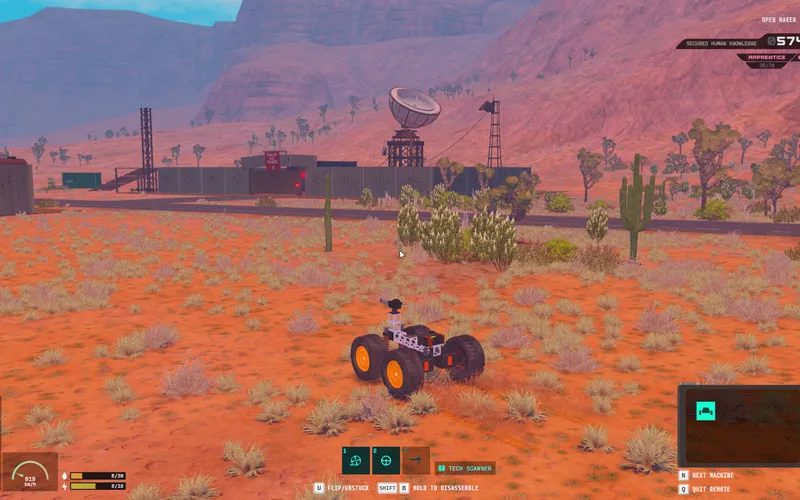
How do engines and propulsion work in The Maker Way?
Propulsion in The Maker Way is governed by a Newtonian physics model where thrust, motor torque, and vehicle weight directly interact with terrain incline and aerodynamic drag. Choosing the right motor array determines whether your machine can haul heavy mineral loads uphill or take off as an agile aerial scout. Every propulsion unit demands sustained power, requiring balanced battery banks and fuel cells.
Confirmed Engine & Propulsion Categories
| Propulsion Type | Operating Medium | Energy Requirement | Best Use Case |
|---|---|---|---|
| Electric Wheel Drives | Ground terrain & sand dunes | Stored Battery Voltage | Low-noise reconnaissance & desert scouting |
| Combustion Engines | Heavy rovers & mining haulers | Liquid Hydrocarbon Fuel | Heavy payload towing & continuous torque |
| Vertical Lift Thrusters | Atmospheric flight & hovercraft | Hybrid Electric / Fuel | Aerial drones & canyon obstacle crossing |
| Directional Maneuver Jets | Flight attitude & precision turns | Auxiliary Battery Power | Pitch, yaw, and roll stabilization |
(Exact horsepower numbers, fuel burn per kilometer, and thruster Newton outputs: 官方尚未公布 / Not yet announced)
Thrust-to-Weight Optimization
Building a functional vehicle requires maintaining a positive thrust-to-weight ratio:
- Calculate Dry Mass: Sum the weight of structural blocks, cockpits, and mounted electronics.
- Account for Live Cargo: Stolen server drives and mined mineral ore add substantial weight during return trips.
- Thrust Headroom: Ensure thrusters produce at least 30% more vertical lift than the empty vehicle weight so you can ascend while loaded.
- Symmetrical Mounting: Placing engines unevenly creates rotational torque, causing vehicles to pull sideways or spin uncontrollably in mid-air.
Power Supply and Heat Management
- Continuous Draw vs. Burst Throttle: Cruising on flat salt flats draws baseline power, but boosting up steep dunes drains battery reserves rapidly.
- Redundant Fuel Tanks: When operating far from base outposts, secondary fuel tanks prevent stranding during extended deep-desert sorties.
- Vulnerability to Enemy Fire: Engines represent large physical hitboxes. Wrap propulsion units in protective cowling to shield them from patrol lasers.
Frequently Asked Questions
Can engines be damaged independently in combat?
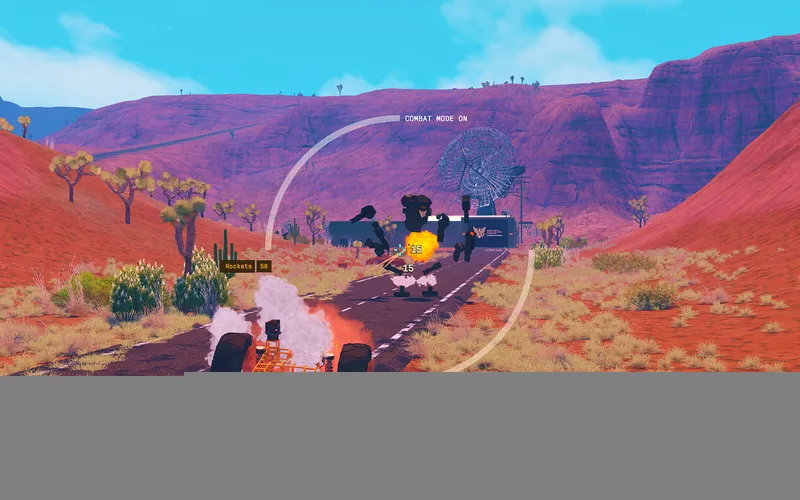
Yes. According to Demo 3.0 combat tuning notes, enemy weapons target remaining physical vehicle parts rather than an abstract center point. A direct hit to an engine pod will impair mobility.
Do flying machines consume more energy than ground rovers?
Vertical thrusters continuously fight gravitational pull, resulting in higher continuous energy and fuel consumption compared to passive wheel rolling resistance.
Can you build hybrid gas-electric machines?
Official mechanics allow modular pairing of fuel generators, battery storage arrays, and electric motors within a single connected chassis grid.